


Dear Ladies and Gentlemen, dear Friends,
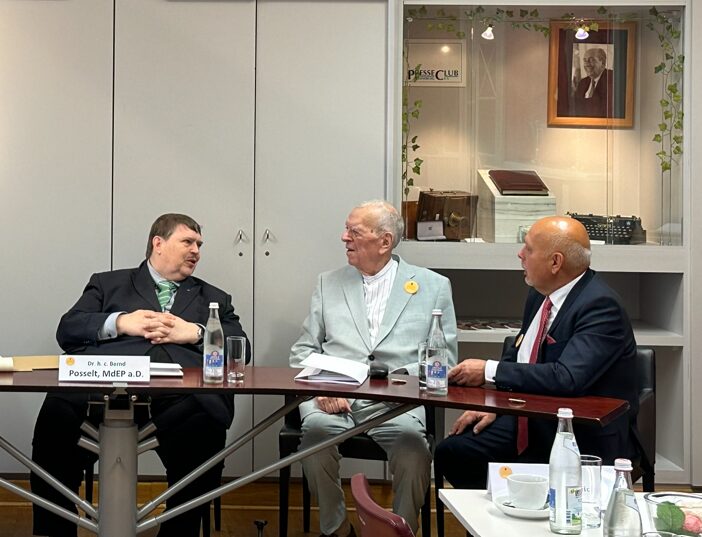
The eightieth anniversary of the end of the Second World War brings not only commemorations, but also important reflections on the past. These questions were at the heart of our preparations for the symposium we organise annually in Brno, focusing on German-language literature born in the Czech lands. This year’s edition is entitled A Tribute to Jürgen Serke.
We wish to honour the writer and journalist who, in his book Böhmische Dörfer, uncovered a kind of literary Atlantis: he portrayed dozens of German-speaking authors who had been Czechoslovak citizens but lost their citizenship after the war and were subsequently forgotten in their former homeland. Our friend Serke himself experienced exile—one morning, under Stalin’s orders, he and his German parents awoke to find themselves in Poland.
During the internationally attended symposium, we will also address the political context: the expulsion of people across Europe, which brought tragedy and suffering to many nations. Sadly, some still view such actions as acceptable tools of political conflict resolution. It was not long ago that former Czech President Miloš Zeman publicly suggested that Israel should consider a similar approach with the Palestinians, citing the Czechoslovak example from eighty years ago. A similar idea was later proposed by former U.S. President Donald Trump.
Against this backdrop, the organisers and participants of the Brno symposium will no doubt recall the fate of their fellow citizens of German heritage, who were forced to leave their homes after the war.
The Sudeten German community includes people who experienced this separation firsthand. Yet most of its current members are their children and grandchildren, who know the past only through the memories of their elders. But this is not just about them. German-speaking residents lived in the Czech lands for centuries. Our shared history includes both fruitful coexistence and deep conflict. The suffering of war and forced displacement turned complex relations into enmity, even reaching inter-state levels.
We firmly believe that in the eighty years since the war, we as neighbours have come a long way—from enmity to efforts at mutual understanding and finally to reconciliation, which was formally acknowledged by the constitutional representatives of both our countries in a spirit of friendship.
We now believe the time has come to take this progress further: to extend our hands to former fellow citizens and their descendants.
We invite the Sudeten German community to hold their gathering in Brno in 2026. The following Czech artists, philosophers, historians, sociologists, educators, politicians, journalists and other public figures have read and signed this appeal in support:
Miloš Doležal
Tomáš Halík
Josef Holcman
Matěj Hollan
Petr Hruška
Karel Hvížďala
Mojmír Jeřábek
Dora Kaprálová
Vladimír Karfík
Pavel Kosatík
Jiří Kratochvil
Eda Kriseová
Daniel Kroupa
Mikuláš Kroupa
Josef Mlejnek
Bedřich Moldan
Dobrava Moldanová
Petr Oslzlý
Petr Pithart
Bolek Polívka
Petr Pospíchal
Jaroslav Rudiš
Pavel Rychetský
Břetislav Rychlík
Vít Slíva
Olga Sommerová
Jiří Suchý
Jan Šabata
Anna Šabatová
Marcela Šabatová
Pavel Švanda
Kateřina Tučková
Milan Uhde
Ondřej Vaculík
Jan Vedral
Alena Zemančíková
V Brně 6. června 2025


